



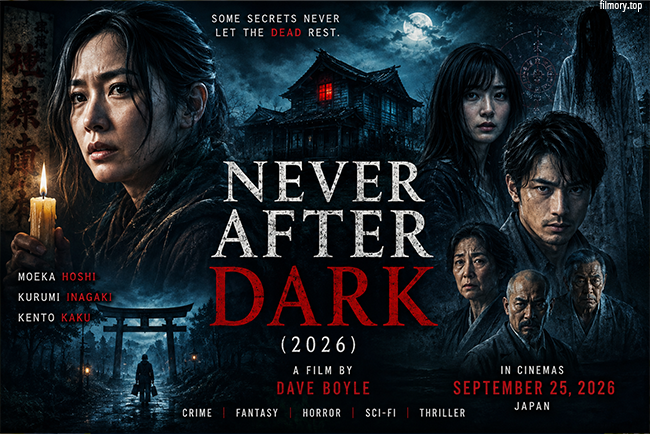
Japanese cinema has long excelled at blending supernatural folklore with psychological suspense, and Never After Dark (2026) continues that tradition in impressive fashion. Directed and written by Dave Boyle, this genre-bending thriller combines horror, fantasy, crime, and science fiction elements into a gripping narrative. Set against the atmospheric backdrop of rural Japan, the film follows a traveling psychic whose mission to help lost souls cross over leads her into a terrifying confrontation with an ancient and powerful entity.
The movie delivers suspense, emotional depth, and chilling mysteries while keeping viewers engaged from beginning to end. With strong performances from Moeka Hoshi, Kurumi Inagaki, and Kento Kaku, Never After Dark stands out as one of the most intriguing Japanese horror releases of 2026.
Never After Dark (2026) – Quick Facts
| Category | Details |
|---|---|
| Movie Title | Never After Dark |
| Release Date | September 25, 2026 |
| Country | Japan |
| Language | Japanese |
| Director | Dave Boyle |
| Writer | Dave Boyle |
| Genres | Crime, Fantasy, Horror, Sci-Fi, Thriller |
| Main Cast | Moeka Hoshi, Kurumi Inagaki, Kento Kaku |
| Filming Location | Yamanashi, Japan |
| Production Companies | Signal181, United Lounge Tokyo |
Storyline: A Journey into Darkness
The story centers on a wandering psychic who travels across Japan helping trapped spirits find peace. Her unusual profession often places her in contact with the supernatural, but nothing prepares her for what she discovers at a remote countryside house.
While investigating a malevolent presence haunting the property, she uncovers a series of disturbing secrets linked to the house’s past. As the mystery deepens, the psychic realizes that the entity is far more powerful than anything she has faced before. Every clue draws her closer to a shocking truth, and soon she finds herself hunted by a deadly threat emerging from an unexpected source.
The film carefully balances paranormal horror with detective-style investigation. This combination creates an engaging experience that keeps audiences guessing until the final moments.
Read more >> Hold the Fort (2026): A Wild Horror-Comedy Battle Between Suburbia and Hell
Dave Boyle’s Vision and Direction
Director Dave Boyle demonstrates remarkable control over atmosphere and pacing throughout the film. Rather than relying solely on jump scares, he builds tension through eerie silence, unsettling imagery, and psychological uncertainty.
The remote setting of Yamanashi plays a significant role in establishing the film’s mood. Mist-covered landscapes, isolated homes, and shadow-filled interiors create a constant feeling of unease. Boyle uses these elements to immerse viewers in a world where danger hides behind every corner.
His screenplay also explores themes of grief, unresolved trauma, and the boundary between life and death. These emotional layers elevate the story beyond a conventional horror experience.
Outstanding Performances from the Cast
Moeka Hoshi delivers a compelling lead performance as the traveling psychic. She portrays strength, vulnerability, and determination with equal effectiveness. Her character serves as the emotional anchor of the film and guides viewers through its increasingly complex mysteries.
Kurumi Inagaki contributes an engaging supporting performance that adds emotional weight to several key scenes. Meanwhile, Kento Kaku brings intensity and unpredictability to his role, helping maintain suspense throughout the narrative.
Veteran performers Tae Kimura, Bokuzō Masana, and Mutsuo Yoshioka further strengthen the ensemble cast. Their presence adds authenticity and depth to the story’s darker moments.
Read more >> Iga Świątek Starts Bad Homburg Campaign in Style
Horror Meets Fantasy and Science Fiction
One of the film’s greatest strengths is its willingness to blend multiple genres. Traditional ghost-story elements merge seamlessly with fantasy concepts and science-fiction themes.
The supernatural entity at the center of the narrative remains mysterious for much of the runtime. As the truth behind its origins gradually emerges, viewers encounter surprising twists that expand the scope of the story.
This genre fusion helps Never After Dark distinguish itself from many contemporary horror films. The result is a unique cinematic experience that appeals to both horror enthusiasts and mystery lovers.
Visual Style and Atmosphere
The cinematography captures the haunting beauty of rural Japan while emphasizing feelings of isolation and dread. Dark corridors, abandoned rooms, and moonlit landscapes create memorable visual moments.
Sound design also plays a crucial role. Subtle ambient noises and carefully timed musical cues enhance tension without overwhelming the narrative. Together, the visuals and audio create an immersive atmosphere that lingers long after the credits roll.
Final Verdict
Never After Dark (2026) is a captivating supernatural thriller that successfully combines horror, mystery, fantasy, and science fiction. Dave Boyle’s direction, a strong cast led by Moeka Hoshi, and an intriguing storyline make the film one of the standout Japanese genre releases of the year.
Its intelligent storytelling, atmospheric visuals, and emotional depth ensure that audiences remain invested from beginning to end. For fans of Japanese horror and supernatural mysteries, Never After Dark is a must-watch film that delivers both scares and substance.
Rating: 8.5/10
A haunting, suspenseful, and emotionally engaging journey into the unknown that proves some secrets should never come to light after dark.


, a chilling Japanese supernatural thriller blending horror, mystery, and dark secrets in an unforgettable story.)