



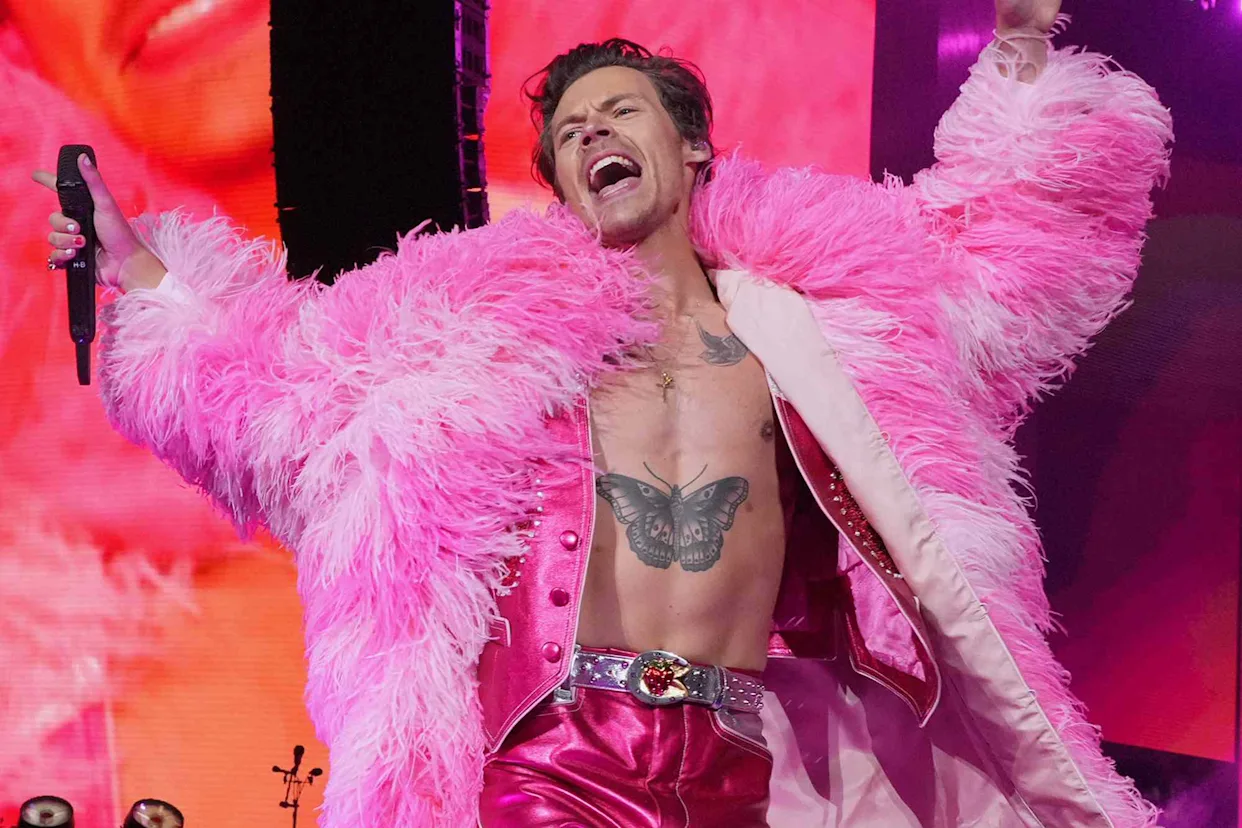
The launch of Harry Styles’ fourth solo album makes one thing abundantly clear: the British singer is operating at an entirely different level of stardom. From midnight record store openings across the UK to a landmark residency tour in North America, every detail of the rollout reflects the scale of his cultural impact.
In fact, anticipation for the new Harry Styles album has been so intense that fans queued overnight to secure physical copies on release day. Adding to the prestige, Styles has been named curator of the Meltdown festival at London’s Southbank Centre—an honour previously held by icons such as David Bowie, Patti Smith, Yoko Ono and Ornette Coleman. The message is unmistakable: Harry Styles is not just a pop star, but a major artistic figure.
A Launch Built on Scale and Confidence
The promotional push reached new heights at the Brit Awards, where Styles delivered a carefully choreographed performance of the album’s lead single, “Aperture.” The ceremony even featured a comedic sketch that essentially functioned as a mini advertisement for the album. It was clear who the spotlight belonged to.
Perhaps the most striking move, however, is the accompanying tour. Instead of traditional city-to-city dates, Styles has opted for extended residencies in single venues per country—or even continent. North America alone will see 30 shows at Madison Square Garden. The strategy signals remarkable confidence: fans are expected to travel to him, not the other way around. Judging by the reported 11.5 million ticket applications for those New York shows, that confidence is well placed.
A Moody, Cohesive Sound
Musically, Harry Styles’ fourth solo album takes a noticeably different approach from previous chart-topping hits like “As It Was” and “Watermelon Sugar.” Instead of immediate pop anthems, the album leans into understated, late-night atmospheres.
“Aperture” sets the tone with its hazy, post-club mood. Across the record, listeners encounter mid-tempo house beats, reflective piano chords, and acoustic singer-songwriter textures. Tracks like “American Girls” glide on smooth rhythms, while “Paint By Numbers” strips things back to intimate acoustic arrangements.
Even the energetic “Are You Listening Yet?” avoids the predictable build-and-drop structure. Though it features a clattering dance rhythm and a bassline reminiscent of Reel 2 Real’s “I Like to Move It,” the track deliberately sidesteps a conventional chorus. The expected explosion never quite arrives, reinforcing the album’s restrained aesthetic.
This muted palette creates a cohesive listening experience. Rather than a playlist-friendly collection of singles, the project feels like a carefully curated album—designed to be played from start to finish in one sitting.
Read More>>Traditional Medicine Health
Highlights and Subtle Strengths
There are moments where the creative risks pay off beautifully. “Season 2 Weight Loss” stands out with its echoing breakbeat, ghostly backing vocals, and analogue synth accents. “Carla’s Song,” the closing track, floats on gauzy electronics layered over a steady four-on-the-floor pulse. Meanwhile, “Coming Up Roses” charms with pizzicato strings and hushed, intimate vocals.
However, the album’s consistent mood can also blur individual songs together. Tracks such as “The Waiting Game,” “Taste Back,” and “Pop” are pleasant but less memorable. At times, the emphasis on atmosphere overshadows the melodic hooks that previously defined Styles’ biggest hits.
Lyrical Ambiguity and Personal Reflection
Harry Styles has described the album’s lyrics as “a long diary entry” documenting his life since his previous release, much of it reportedly spent in Italy. Yet the diary appears coded. Lines from “Ready, Steady, Go!” are cryptic, almost intentionally opaque. Meaning feels elusive, and interpretation requires effort.
On “Pop,” references to being a “squeaky clean fantasy” may hint at the pressures of his time in One Direction. But just as listeners begin to decode possible autobiographical details, the narrative shifts into playful abstraction.
In an era when fans and media obsessively dissect lyrics for hidden gossip, Styles seems to resist easy answers. The ambiguity may be frustrating for some, but it also signals artistic independence. Rather than courting headlines or controversy, he appears content to let the music speak—however subtly.
A Superstar Playing by His Own Rules
In today’s competitive pop landscape, many artists rely on chart-boosting tactics such as multiple limited editions or public feuds. This album feels refreshingly undesperate by comparison. It does not strain for viral moments or radio domination. Instead, it prioritizes mood, cohesion, and creative freedom.
Commercially, that approach hardly matters. With millions clamouring for tour tickets and global media attention fixed on every move, Harry Styles occupies rare territory. When you are unequivocally one of the biggest names in music, you can afford to follow your instincts.
This fourth solo album may not deliver instant pop bangers, but it reinforces something more enduring: Harry Styles’ status as a confident, evolving artist who no longer needs to prove his scale. He already knows the world will follow.
Read More>>Love Insurance Kompany