



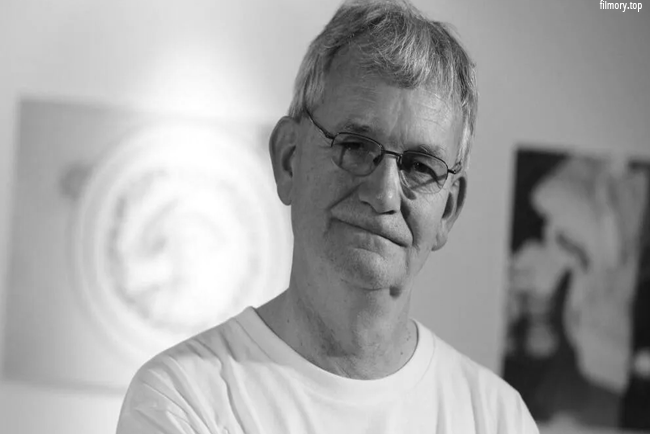
Martin Parr, one of Britain’s most influential photographers, has died at the age of 73. He passed away peacefully on Saturday at his home in Bristol. His family has requested privacy, as confirmed by the Martin Parr Foundation. Parr leaves behind a rich visual legacy that reshaped how the world viewed British life. His wife Susie, daughter Ellen, sister Vivien and grandson survive him.
Early Life and Creative Origins
Parr was born in Surrey in 1952. His passion for photography came from his grandfather, who was an avid amateur photographer. By his teenage years, Parr already knew the career he wanted. After studying at Manchester Polytechnic, he photographed at Butlin’s holiday camps with Daniel Meadows. There he discovered the colourful postcards of John Hinde, which later inspired his vivid palette.
Read more >> Zombie Plane Movie: Cast, Storyline & Why This Action-Comedy Will Be a Must-Watch
The Rise to Fame with ‘The Last Resort’
His breakthrough came in the mid-1980s with The Last Resort, a bold and cheeky study of working-class holiday life in New Brighton. Parr documented crying children, fish and chip wrappers, rundown amusements and sunburnt beachgoers. His colour-saturated style stood apart from the traditional black-and-white documentary style of the time. The work sparked fierce debate, but it changed the direction of British documentary photography.
Read more >> ICD 10 Coronary Artery Disease: Codes, Symptoms, Diagnosis and Treatment
Controversy and Cultural Debate
The Last Resort received both praise and criticism. Some felt Parr’s work mocked the working class. Others believed he captured life exactly as it was. Parr later explained that some viewers, especially from London and the South East, were shocked by the scenes. “It was almost like it was my fault that the place looked so scruffy,” he joked. Despite the criticism, the project cemented his name in the photography world.
A Sharp Eye on British Social Life
Parr’s photographs offered a mix of humour, empathy and social commentary. He once said, “I make serious photographs disguised as entertainment.” His lens explored the peculiarities of English life, from village fetes to modern shopping centres. During the 1980s, he also captured middle-class culture in The Cost of Living, turning his satirical gaze on garden parties, private schools and everyday consumer habits.
Joining Magnum and Global Influence
Parr’s admission into Magnum Photos in 1988 sparked debate inside the agency. Henri Cartier-Bresson referred to his work as “from another planet”. Some Magnum members resisted his entry, but he was accepted by a single vote. Parr later served as Magnum’s president from 2014 to 2017. During the 1990s, he broadened his scope, exploring tourism in Small World and global consumer culture in Common Sense.
Personal Projects and Vast Collections
Beyond photography, Parr was a passionate collector. He gathered photobooks, postcards and quirky memorabilia, including Soviet space-dog items and Saddam Hussein watches. With Gerry Badger, he co-authored the influential series The Photobook: A History. In 2017, Parr sold his 12,000-book collection to Tate. That same year, he opened the Martin Parr Foundation in Bristol, showcasing British and Irish photography and preserving his own archive.
Later Years and Enduring Impact
Parr remained active and outspoken in recent years. In a 2024 interview, he noted the need for satire in a world overwhelmed by consumerism. His collaborators described him as enthusiastic, warm and endlessly curious. His work influenced generations of artists and reshaped the visual language of documentary photography.
A Lasting Legacy
Martin Parr’s images defined British cultural identity for over five decades. His fearless approach, colourful style and wry humour transformed the genre. His legacy will live on through his foundation, his books and the countless photographers he inspired.