



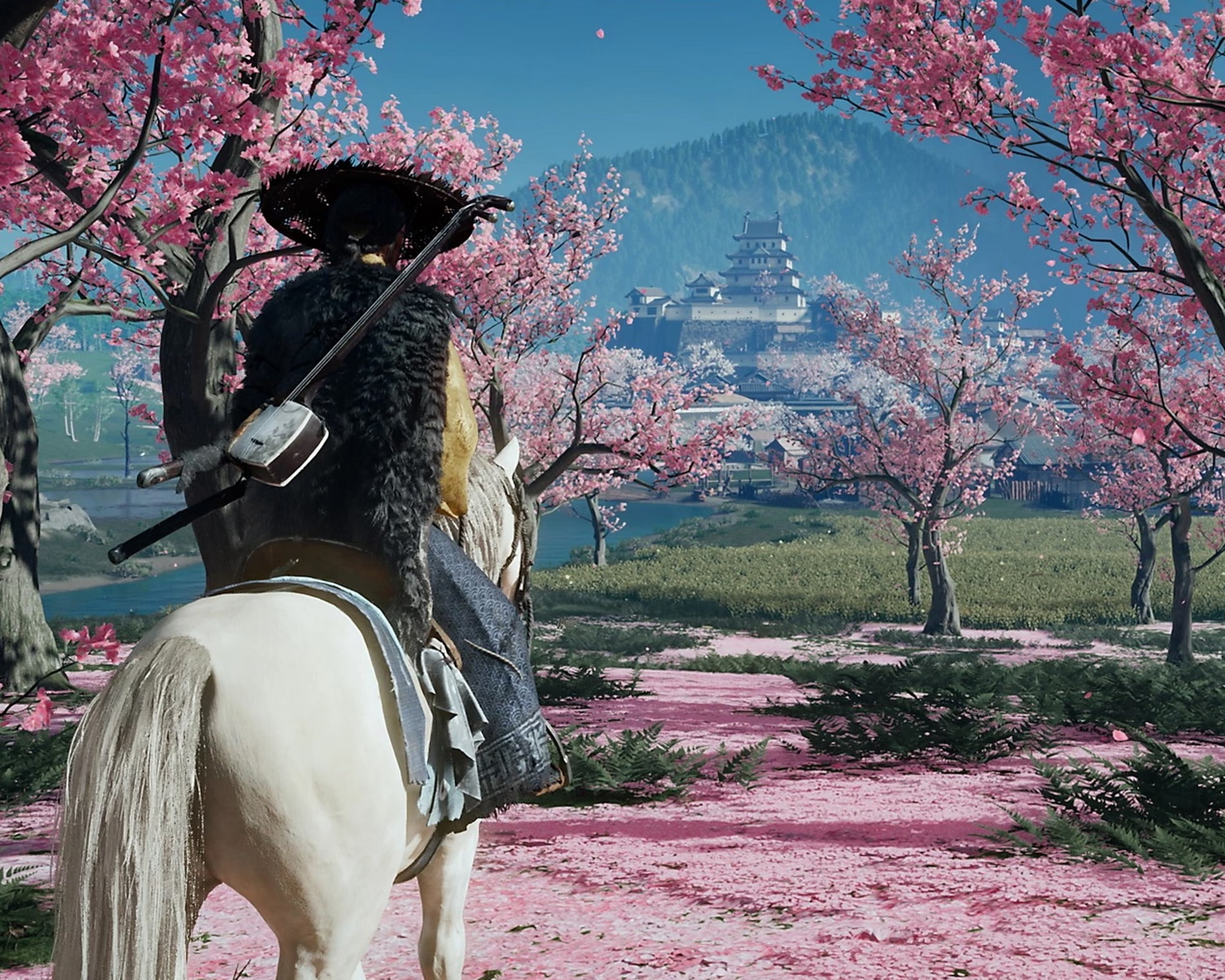
Ghost of Yōtei is Sucker Punch’s highly anticipated follow-up to 2020’s Ghost of Tsushima. While its predecessor earned praise for breathtaking visuals and a reverent samurai tone, it also carried a sense of restraint. This time, the studio embraces brutality, freedom, and artistry in a way that makes Ghost of Yōtei one of the most striking open-world action games of the decade.
Mochizuki, the Unlucky Horse
Your journey begins alongside Mochizuki, a loyal horse whose name means “full moon” in archaic Japanese. Sadly, she often feels like the most unfortunate creature in northern Japan. The summon button sits uncomfortably close to the heal button, which means she is regularly called straight into bloody skirmishes. More than once she has galloped into an arrow’s path or taken a sword meant for my enemies. At times, she calmly waits at the battlefield’s edge until the chaos subsides, a reminder of the game’s balance between beauty and tragedy.
From Tsushima to Yōtei
Like Ghost of Tsushima, this game blends cinematic direction with player-driven chaos. Majestic standoffs, golden birds guiding you to hidden springs, and fortress infiltrations make every moment feel purposeful. But no framing can withstand human clumsiness—summoning Mochizuki into a duel or accidentally setting yourself on fire transforms solemnity into slapstick.
Where Tsushima was visually stunning yet weighed down by its protagonist’s constant moral struggles, Ghost of Yōtei takes a sharper, more satisfying path. Heroine Atsu is unflinching. After witnessing her family’s murder at the hands of the masked Yōtei Six, she vows vengeance. Erika Ishii delivers a compelling performance, capturing Atsu as a hardened killer who seems to relish the violence. Unlike Jin Sakai, who wrestled with dishonor, Atsu fully embraces her bloody role.
Combat That Never Grows Old
The combat system is where Ghost of Yōtei shines brightest. The fighting is fierce, fluid, and challenging, with an arsenal that expands beyond the dual katana to include spears, bows, and the massive ōdachi sword. Each duel feels weighty, especially against generals who tower over Atsu but can still fall to well-timed precision.
Even after more than 20 hours, the battles never became trivial. The difficulty keeps every encounter engaging, a rarity in open-world action games. Fans of titles like Elden Ring or Monster Hunter will find the challenge refreshing, but it’s approachable enough that players who master evasion and parrying can thrive.
Read More>>Xavien Howard Retires
A Digital Tribute to Japan
Visually, Ghost of Yōtei is breathtaking. From golden ginkgo forests to distant mountains and rivers teeming with fish, the world of Ezo feels alive. You navigate without intrusive maps—guided instead by the wind, birds, and wolves that lead you toward shrines, springs, or hidden treasures.
The attention to detail makes exploration as rewarding as combat. Players can roast fish over fires, strum a shamisen, or paint ink strokes on canvas. These small moments of peace contrast beautifully with Atsu’s bloody quest, deepening immersion.
Compared to Assassin’s Creed Shadows, which sometimes overcomplicates exploration with recruitment and resource management, Ghost of Yōtei is refreshingly straightforward. It lets you focus on the essentials: combat, discovery, and storytelling.
Music and Atmosphere
The soundtrack blends old-west rhythms with traditional Japanese instruments, underscoring that this is a stylized vision of 1600s Japan through an American lens. While samurai films might take a more restrained approach, the game thrives on spectacle, balancing cinematic weight with frenetic action.
This isn’t a meditative tale of honor—it’s about vengeance, survival, and the raw beauty of nature in turmoil. And in that simplicity, it succeeds.
Becoming Part of Ezo
As Atsu’s reputation spreads, villagers leave offerings for the vengeful onryō, the ghost tearing through oppressors. She becomes one with the land itself, joined by wolves in battle and foxes in exploration. This growing legend makes you feel less like a visitor and more like a force of nature shaping Ezo’s destiny.
The deeper I went, the more I wondered what would happen once Atsu’s vengeance ended. Could she find peace, or would she fade into the same wind that once guided her?
Final Verdict
Ghost of Yōtei may not reinvent the open-world genre, but it polishes every element until it gleams. From the brutality of combat to the serene beauty of exploration, it offers a balance that Ghost of Tsushima never quite achieved. The story is straightforward, yet Atsu’s journey—brought to life by Ishii’s strong performance—makes it emotionally gripping.
Even dozens of hours in, drawing Atsu’s sword before a duel still fills me with excitement. Ghost of Yōtei is not only a worthy successor but one of the most captivating samurai adventures ever created.
Raad More>>Eiichiro Oda Net Worth 2025



[…] Read More>>Ghost of Yōtei Review […]
[…] Read More>>Ghost of Yōtei Review […]