



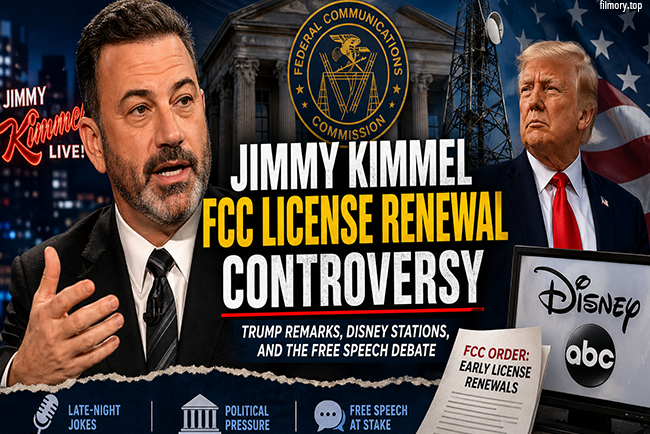
Late-night television once again became a platform for sharp political commentary as Jimmy Kimmel addressed what he called an increasingly chaotic political climate. He described recent events as a mix of “nonsense” and serious developments that feel difficult to process. His monologue focused heavily on Donald Trump’s public remarks and political controversies, including a high-profile state visit involving King Charles and Queen Camilla.
Kimmel also mocked an incident involving misplaced flags during official Washington preparations, using it as an example of administrative mistakes. He further criticized Trump’s remarks about aging and mortality, pointing out how the former president joked about his own lifespan during a formal event. The comedian contrasted this with Trump’s earlier criticism of Kimmel’s own jokes, highlighting perceived inconsistencies in political reactions to satire.
Political Satire Targets Trump Administration Actions
Kimmel’s commentary also extended into more serious political territory. He referenced the Trump administration’s legal actions involving former FBI Director James Comey, which had been widely disputed in court. The discussion included a controversial interpretation of a social media post involving seashells arranged in a numerical pattern, which some officials treated as a potential threat.
Kimmel dismissed the interpretation as exaggerated and compared it to harmless artwork. His remarks reflected a broader critique of what he described as overreach in political responses to symbolic or satirical expressions. The segment reinforced the ongoing tension between political figures and late-night comedians who regularly target them.
The Daily Show Raises Concerns Over Public Spending
On The Daily Show, Josh Johnson expanded the discussion by addressing the political fallout from recent security-related incidents in Washington. He criticized proposals suggesting taxpayer funding for a $400 million ballroom reportedly linked to Trump’s administration. Johnson questioned the logic behind using public funds for such a project, especially amid broader debates about government spending priorities.
He also pointed out contradictions in political messaging around fiscal responsibility. The segment framed the proposal as part of a larger pattern where major policy discussions are influenced by unrelated or symbolic events. Johnson’s commentary emphasized public frustration with perceived financial mismanagement at the federal level.
Read more >> Animal Farm (2026) Movie Review, Cast, Story & Release Date
FCC Orders Early License Renewals for Disney Stations
In a separate but related development, the Federal Communications Commission issued an order requiring Disney-owned television stations to file their broadcast license renewals ahead of schedule. The directive applies to major markets including Los Angeles, New York, and other major US cities. These licenses were not originally due for renewal until 2028.
According to reports, the decision is linked to an ongoing FCC investigation into Disney’s diversity, equity, and inclusion practices. However, the timing of the order has drawn attention due to its connection with controversy surrounding Jimmy Kimmel’s recent joke about First Lady Melania Trump. The joke, made during a broadcast monologue, sparked political backlash and calls for disciplinary action.
Read more >> Nottingham Forest vs Aston Villa Live Score, H2H & Prediction 2026
Free Speech Debate and Regulatory Pushback Intensify
Disney confirmed receipt of the FCC order and stated that its stations comply with federal regulations and public interest requirements. The company expressed confidence in its legal standing and readiness to respond through official channels. Meanwhile, FCC officials defended the decision as part of regulatory oversight, not as retaliation for speech content.
However, critics, including advocacy groups and FCC Commissioner Anna M. Gomez, argued that the move represents political interference. They described the order as unprecedented and warned it could set a troubling precedent for media regulation. Supporters of free speech emphasized that broadcast licensing should not be influenced by political satire or commentary.
Media, Politics, and Comedy Collide in Ongoing Conflict
The overlapping controversies involving Jimmy Kimmel’s commentary, Trump administration reactions, and FCC regulatory actions highlight the increasingly complex relationship between media and politics in the United States. Late-night comedy continues to play a significant role in shaping public discourse, often drawing direct responses from political leaders.
At the same time, regulatory decisions affecting major media companies have intensified debate over freedom of expression and government influence. As investigations continue and public reactions grow more polarized, the intersection of entertainment, politics, and regulation remains a focal point of national attention.